Game developers are using generative AI more often while becoming less convinced that it is good for their industry.
That sounds contradictory until the work is separated from the product.
The GDC 2026 State of the Game Industry survey, based on responses from more than 2,300 game industry professionals, found that 36% use generative AI as part of their job. At the same time, 52% said the technology is having a negative impact on the industry, up from 30% in 2025 and 18% the year before.
The same survey explains most of the apparent conflict. The dominant uses are research, brainstorming, routine office work, code assistance, and prototyping. Adoption is also much higher in publishing, support, marketing, and business roles than inside game studios.
The industry is not moving toward one unified position on AI. It is drawing a sharper line between assistance that disappears before release and generation that becomes part of the game players buy.
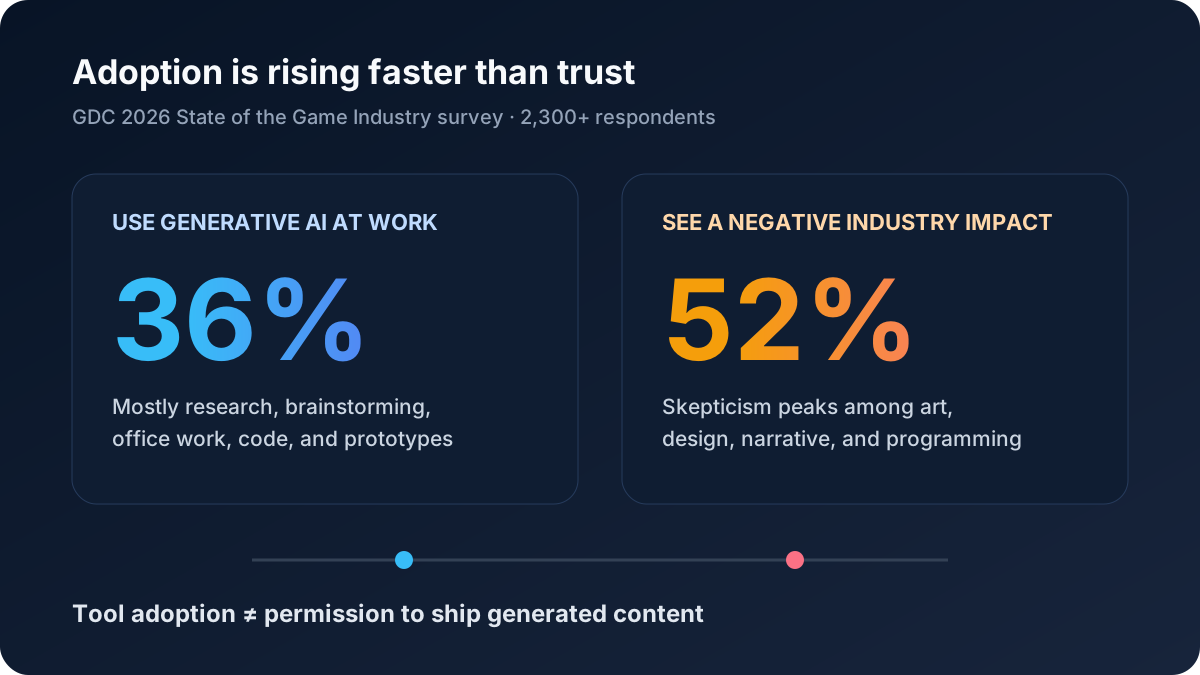
Figure: Generative AI adoption and industry trust measure different things. Many developers use low-risk assistance while remaining skeptical of generated production content.
The adoption number hides where the work happens
GDC reports that 30% of respondents at game studios use generative AI tools. Among people at publishers, support teams, and marketing or public relations firms, the figure rises to 58%. Business professionals also report 58% usage.
That distribution matters. “AI in games” can mean an engineer asking for a regular expression, a producer summarizing meeting notes, a marketer drafting store copy, an artist generating a texture, or an online role-playing game producing dialogue during a live session.
Those activities do not have the same creative, legal, or operational consequences.
The most common use in the GDC survey is research or brainstorming, reported by 81% of generative AI users. Daily tasks such as writing email and code assistance each stand at 47%. Prototyping is 35%.
This is adoption at the edges of production, where outputs can be discarded, checked, or replaced. It does not establish that one third of studios are filling released games with generated art, voices, quests, or characters.
The difference resembles AI use in other software teams. A developer can use a model to explain an unfamiliar API without allowing the model to merge code. A designer can generate twenty mechanic ideas without shipping any of them. An editor can use transcription without surrendering the final cut.
The important variable is not whether a tool was opened. It is how much authority its output received.
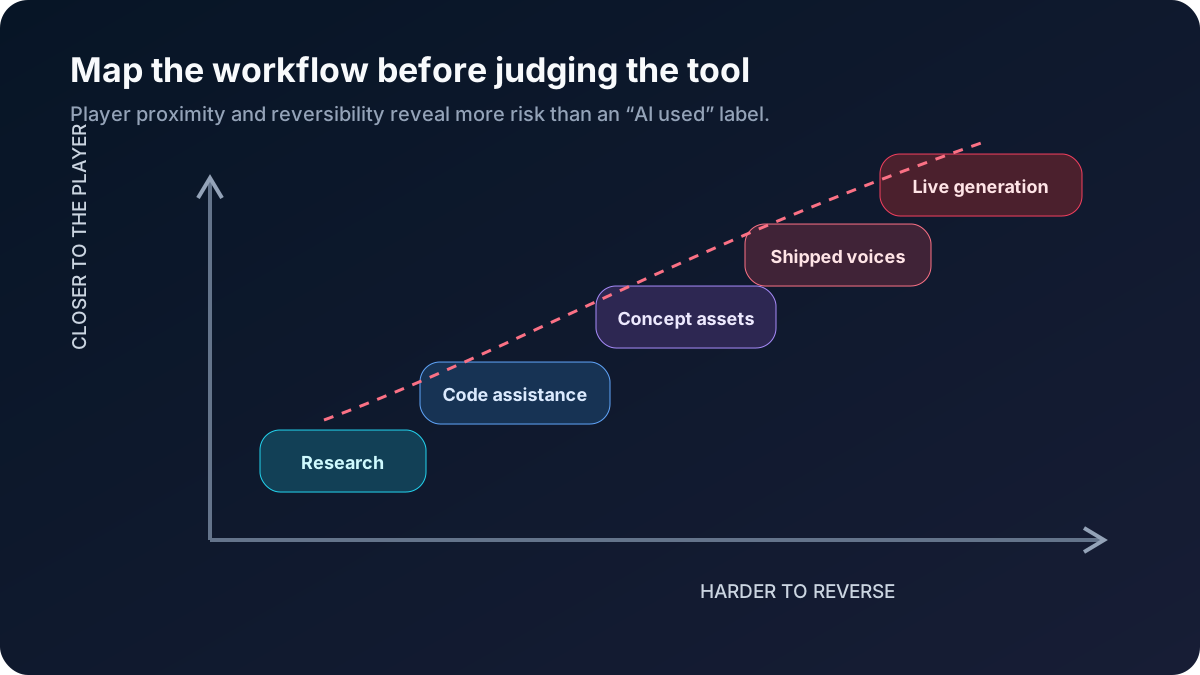
Figure: Research and code assistance are easier to inspect and discard than shipped media or live generation, even when every workflow uses a model.
The people closest to shipped content are the most skeptical
Negative sentiment is highest among the disciplines that have to make generated work coherent inside the game.
GDC reports unfavorable views from 64% of workers in visual and technical art, 63% in game design and narrative, and 59% in game programming. Only 7% of all respondents said generative AI is having a positive impact, down from 13% in the previous report. Positive views are higher among executives and business operations, at 19% each.
The gap is not proof that one group understands technology and another does not. The roles are exposed to different failure modes.
An executive may see a shorter asset backlog. An artist sees topology, style consistency, provenance, revision, and whether the generated result can survive a close camera. A designer sees whether an improvised quest respects progression. A programmer sees latency, nondeterministic bugs, integration work, and the cost of supporting a model after launch.
The same tool can therefore look productive in a demonstration and expensive in a production branch.
Labor conditions sharpen the disagreement. In the same GDC survey, 28% of respondents said they had been laid off during the previous two years, rising to 33% among U.S. respondents. When companies discuss AI efficiency during a period of sustained job loss, workers reasonably evaluate more than output quality. They also evaluate who captures the savings and who absorbs the risk.
Steam already distinguishes assistance from player-facing generation
Valve’s Steamworks Content Survey provides a useful operational boundary.
The survey says that efficiency gains from AI-powered development tools are not its main focus. It asks developers to disclose generative AI used to create content that ships with a game and is consumed by players, including artwork, sound, narrative, and localization.
Valve separates that content into two categories:
- Pre-generated content is created with AI assistance during development and ships in the product.
- Live-generated content is created while the game is running and requires the developer to describe guardrails against illegal output.
This is not a universal ethical standard, and disclosure does not settle questions about training data, labor, or quality. It does identify where platform risk increases: the point at which generated output leaves an internal workflow and becomes part of the customer’s experience.
A private brainstorming result can be rejected without consequence. A generated voice line inside a released game carries performance, rights, localization, age-rating, and consumer-trust implications. A live model adds moderation, service availability, inference cost, and behavior that may be difficult to reproduce during review.
The closer AI output moves to the player, the stronger the evidence and controls should become.
Reversibility is a better policy than a list of approved tools
Studios often respond to generative AI with either a blanket ban or an approved-vendor list. Both are easy to communicate. Neither describes the actual risk.
A more durable policy classifies use by reversibility and authority.
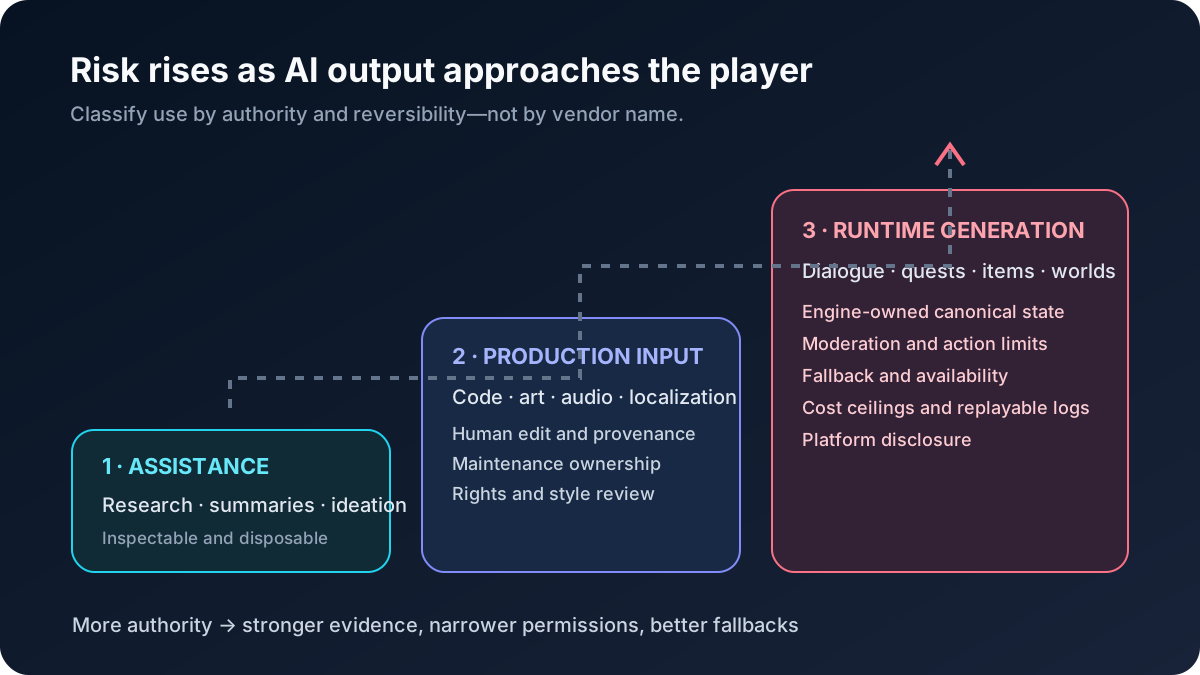
Figure: Review requirements should rise with the authority of the AI output and the difficulty of reversing it.
Low-authority assistance
Research leads, meeting summaries, test-data drafts, temporary code explanations, and disposable ideation can be checked before they affect the project. The output should still be treated as untrusted, but failure is relatively contained.
Production inputs
Generated code, localization, concept work, audio, or 3D assets may enter the pipeline only after review, provenance checks, and ownership are clear. The team needs a human editor and an artifact that can be maintained without depending on the original prompt.
Player-facing runtime generation
Live dialogue, quests, items, images, and behavior need deterministic boundaries around the model. The game must own canonical state, permitted actions, moderation, fallback, cost ceilings, and replayable logs.
Our AI NPC architecture guide applies that boundary to characters: the model may propose dialogue and intent, while the game engine retains world truth and action authority.
The policy question is not “Did anyone use AI?” It is “Could this output change the shipped product, a player’s state, or the studio’s legal obligations?”
Trust requires evidence at the use-case level
The game industry will not resolve its AI debate through one more broad survey question.
Studios need evidence tied to specific workflows:
- Did the tool reduce total production time after review and cleanup?
- Did it increase rejected assets, defects, or inconsistent style?
- Can the team prove the rights and provenance of shipped output?
- Can another employee maintain the result without reconstructing a prompt session?
- Does the feature remain useful when the model is unavailable?
- Are players told when generation materially changes the content they receive?
- Did savings improve the game, or only reduce staffing?
These questions make room for different outcomes. Code search may deliver a measurable benefit while generated key art damages trust. A local companion may create a new kind of play while generic AI dialogue makes authored characters feel cheaper. Neural rendering may become ordinary infrastructure while generative voices remain unacceptable to a game’s audience.
The category “AI” is too broad to carry a single verdict.
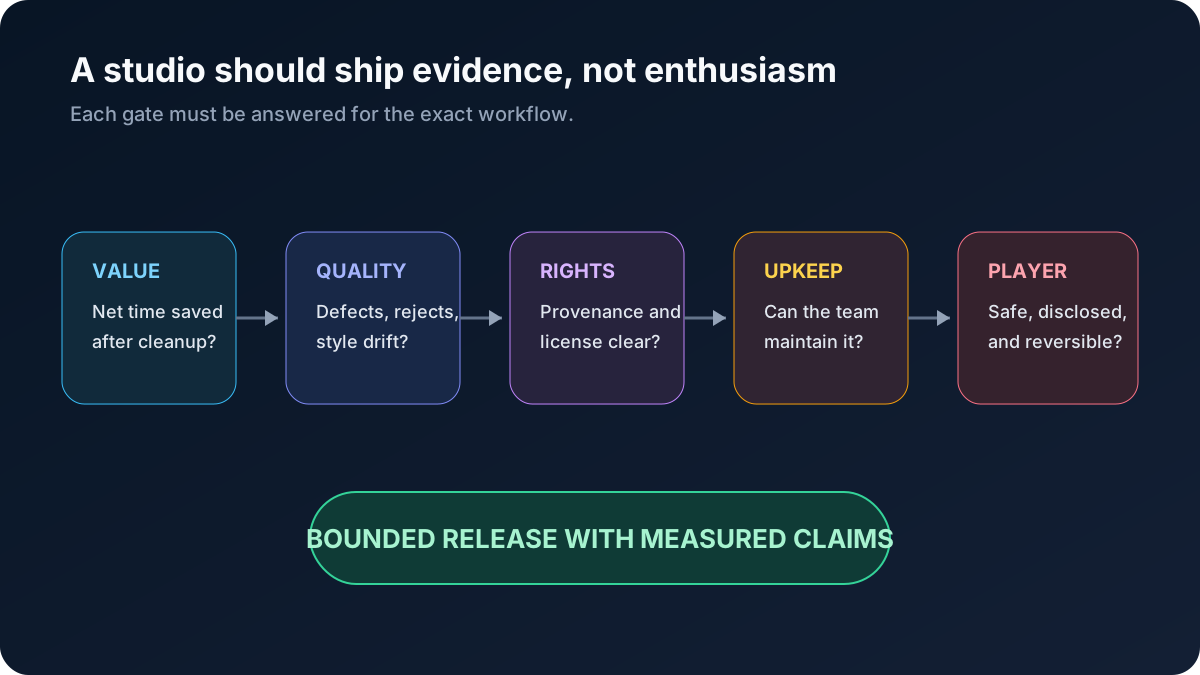
Figure: A credible release claim survives workflow-specific checks for value, quality, rights, maintenance, and player impact.
The winning studios will make narrower claims
Vendors benefit from describing game development as one large pipeline ready for automation. Studios have the opposite incentive. They need to isolate where a model creates value, document where it fails, and protect the parts of development that define the game.
The GDC numbers do not show an industry refusing to experiment. They show an industry experimenting without granting the technology cultural legitimacy.
That distinction can persist. Developers may continue using models for research, code assistance, and prototypes while rejecting generated assets or runtime content. Adoption does not require trust, and trust does not follow automatically from adoption.
The most credible AI strategy for a game studio is therefore a selective one: use the tool where the result is inspectable, reversible, and genuinely useful; demand stronger evidence as it approaches the player; and never treat a tool login as proof that the creative process has been improved.
That selective model resembles an AI control plane: broad model capability stays behind explicit permissions, review gates, logs, and fallback behavior. Studios also need the same production security checklist applied to model access, data handling, and runtime actions.