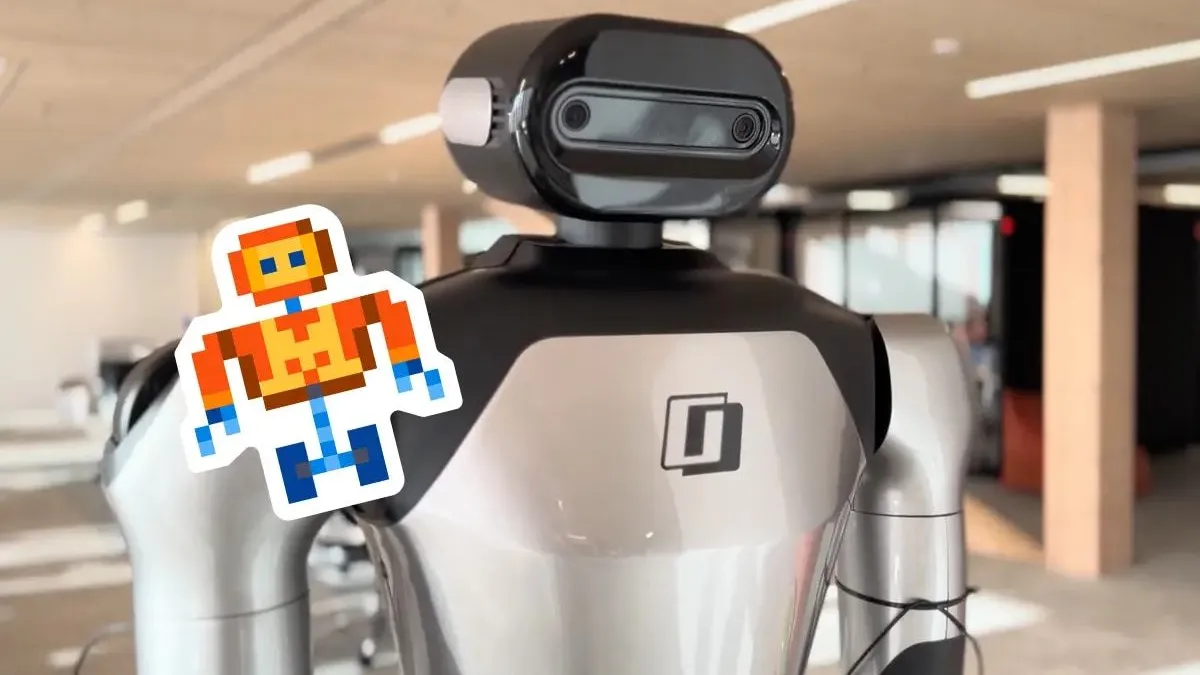
Mistral has built an 8B model that can follow a language instruction and move a robot through an environment using one ordinary RGB camera. The result is technically impressive. It should not be confused with a complete safety architecture.
Robostral Navigate reached a reported 76.6% success rate on the unseen split of R2R-CE, a benchmark for following instructions in continuous environments. Mistral says that result is 9.7 points above the previous best single-camera method and 4.5 points above the best comparison using depth or multiple cameras.
The model demonstrates how much spatial behavior can emerge from visual grounding, simulation, and reinforcement learning. A commercial robot operating around workers, vehicles, doors, and expensive equipment still needs independent sensors and deterministic controls that remain effective when the model is wrong.
One camera can be the intelligence interface. It should not be the only line of defense.
How Robostral Navigate works
Robostral Navigate accepts an RGB image, a language instruction, and a history of observations. Instead of always predicting a metric displacement, it points to image coordinates representing the next target location and predicts the orientation the robot should have when it arrives.
That representation has an advantage. Pointing to a pixel location is naturally less dependent on a particular camera calibration, robot size, or world scale than predicting a fixed movement in meters. When the target lies outside the current field of view, the model falls back to a local displacement such as moving forward and turning by a specified angle.
Mistral reports the following:
| Property | Reported value |
|---|---|
| Model size | 8B parameters |
| Primary sensor | one RGB camera |
| R2R-CE validation seen | 79.4% success |
| R2R-CE validation unseen | 76.6% success |
| Training data | about 400,000 trajectories across 6,000 scenes |
| Robot types | wheeled, legged, and flying |
The model was initialized from an in-house vision-language model trained for grounding tasks such as pointing, counting, and object localization. Navigation training used simulated trajectories, followed by online reinforcement learning with Mistral’s CISPO algorithm. The company says the RL stage improved success by 3.2 percentage points.
The training optimization may be as important as the benchmark
Navigation episodes contain many related observations. Training on each time step as an independent sample repeats the same instruction and history, consuming tokens and compute.
Mistral instead uses prefix caching and a tree-shaped attention mask to place an episode into one sequence while preventing later observations from leaking into earlier decisions. The company says this preserves all time-step learning signals while reducing training tokens by 22x.
That is a meaningful engineering idea beyond robotics. Any agent training pipeline with shared prefixes, branching trajectories, or repeated context can waste substantial compute by encoding the same history again. A correct masking strategy can trade redundant tokens for a more structured batch.
The result still needs external reproduction. Mistral produced the model, selected the training procedure, and reported the benchmark. Real facilities introduce reflective surfaces, smoke, glare, occlusion, moved furniture, damaged lenses, people behaving unpredictably, and hardware faults that a simulation may not represent.
Navigation success is not safety assurance
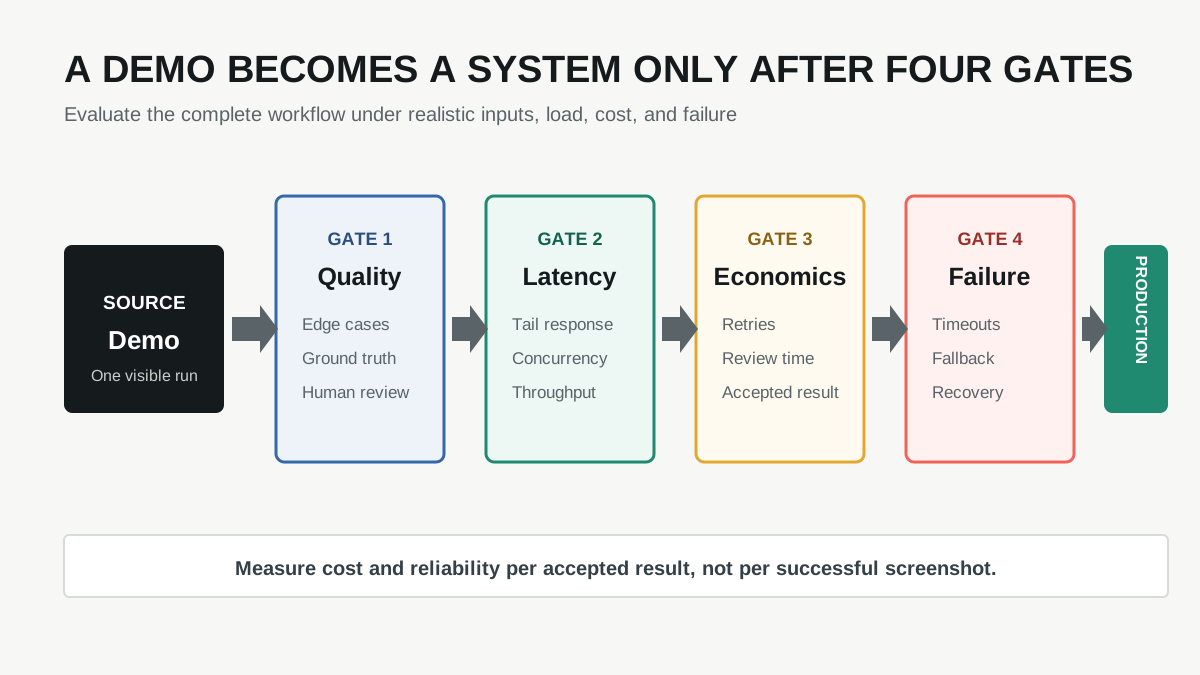
Figure: A demonstration becomes operational evidence only after quality, tail latency, economics, and failure recovery are measured under realistic conditions. Yield Signal Daily editorial diagram.
A 76.6% task-success score answers whether the model reached the instructed destination under benchmark conditions. It does not establish the probability of collision, the severity of a failure, behavior under sensor degradation, stopping distance, or compliance with industrial safety requirements.
Those are different claims.
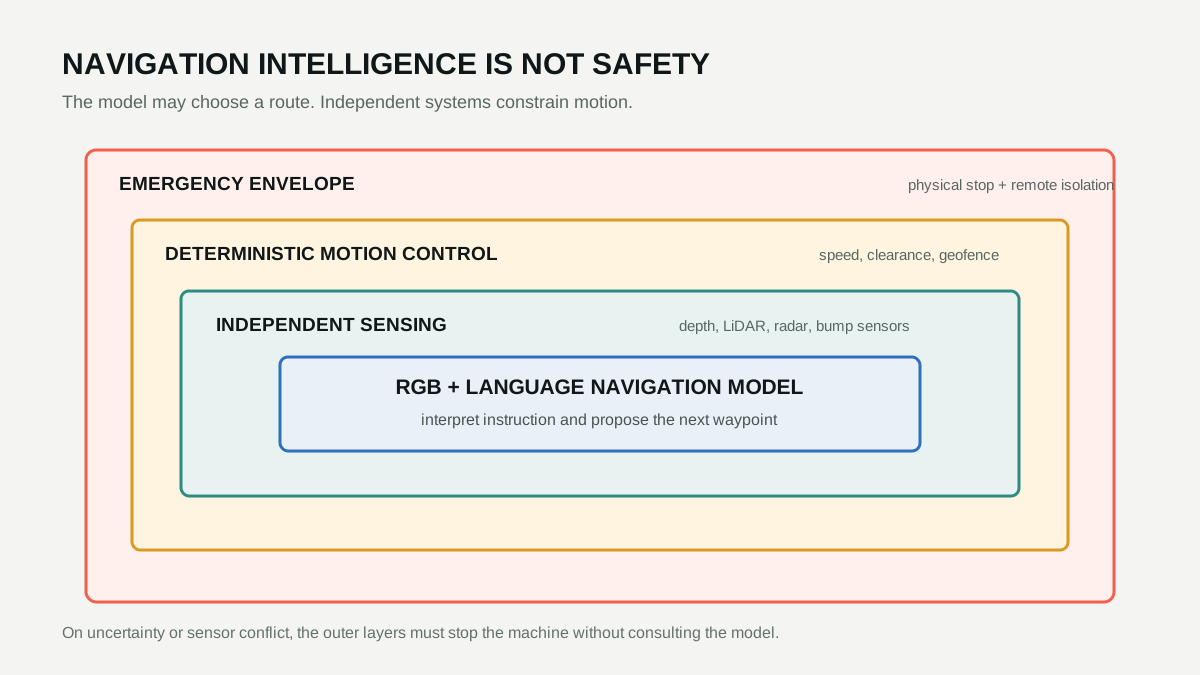
Figure: A vision-language navigation model can propose motion, but independent sensing, deterministic control, and emergency shutdown must constrain the physical robot.
A production robot should combine several layers:
Task perception. RGB vision and the language model interpret the instruction, scene, and likely route.
Independent proximity sensing. Depth, LiDAR, ultrasonic, radar, bump sensors, or safety-rated scanners detect hazards through a different failure mode.
Deterministic motion control. A controller enforces speed, acceleration, geofences, clearance, payload, and allowed zones regardless of the model’s preference.
Fail-safe state. Loss of confidence, inconsistent sensors, network interruption, or controller failure brings the machine to a known safe stop.
Human emergency control. A physical and remote stop path must bypass the model and revoke movement immediately.
Redundancy is ordinary engineering. Even a simple transit door uses multiple checks because one sensor, one controller, or one assumption can fail. A mobile robot capable of moving heavy equipment through a workplace deserves at least the same philosophy.
The best architecture may use one camera for semantic navigation while treating additional sensors as a safety envelope. That preserves the cost and generalization advantages of the model without asking it to provide the only evidence that a path is clear.
Manufacturing is the strongest early market
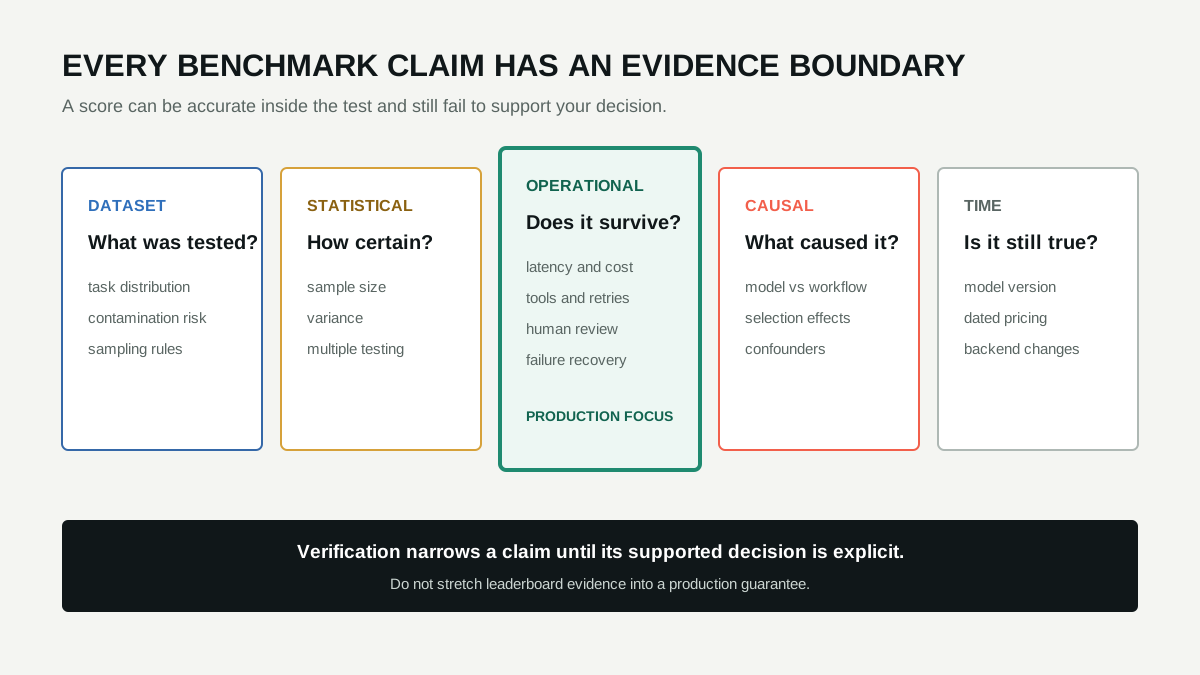
Figure: Dataset, statistical, operational, causal, and time boundaries must be explicit before a result supports a production decision. Yield Signal Daily editorial diagram.
Mistral lists manufacturing, delivery, logistics, and hospitality as potential applications. Manufacturing is likely to justify the first serious deployments because the economics and environment are favorable.
Factories contain repetitive routes, mapped work cells, controlled access, and tasks that can run across multiple shifts. Downtime and labor for specialized operations can be expensive, making a reliable 24-hour robot more valuable than a consumer robot performing an occasional household task.
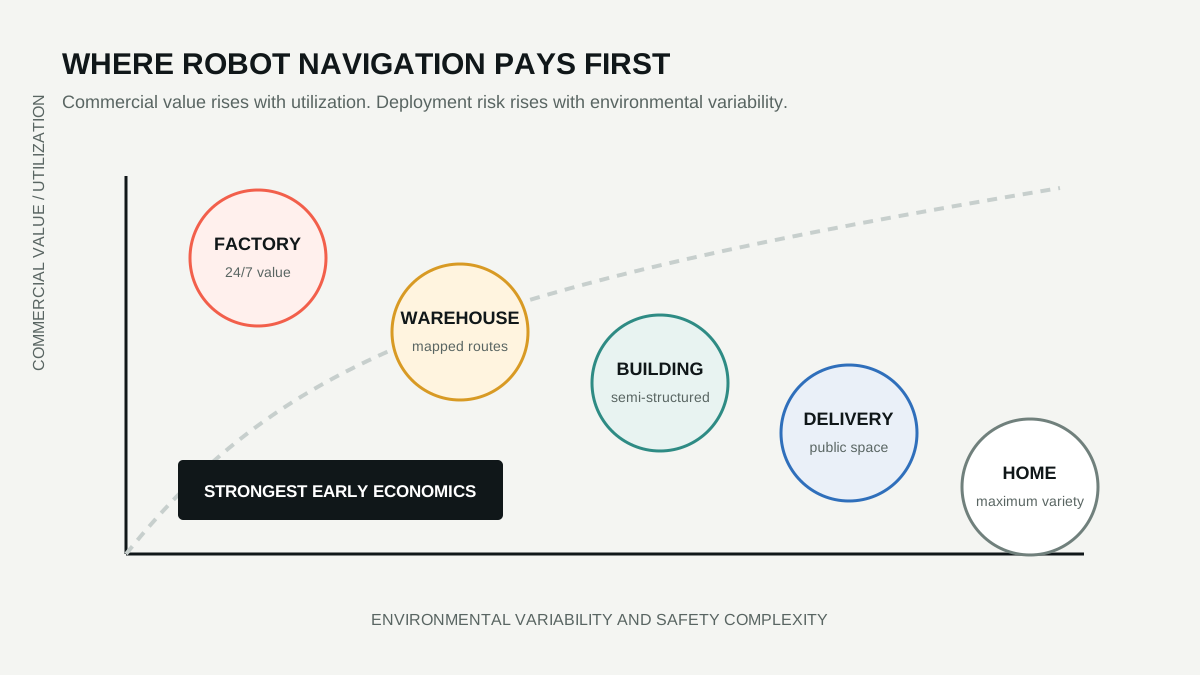
Figure: Structured environments with expensive downtime can justify redundant sensors and integration sooner than open public spaces or price-sensitive homes.
The likely sequence is:
- controlled factories and warehouses;
- commercial buildings with mapped routes;
- semi-structured delivery sites with remote supervision;
- homes and public spaces with highly variable behavior.
Warehousing is also promising, but many current routes can already be solved with simpler automation. Robostral becomes most valuable when a robot must understand a changing environment and a natural-language task rather than repeat one fixed path.
Home robots face a harder price equation. Human labor may remain cheaper for many irregular tasks once hardware, maintenance, insurance, mapping, support, and safety certification are included. A household also contains children, pets, clutter, stairs, mirrors, and constant layout changes. Generality is valuable there, but the tolerance for dangerous failure is extremely low.
The realistic deployment is hybrid
Robot control should use a hybrid local and cloud architecture, but the boundary must be stricter than it is for a chatbot.
Local systems should own obstacle detection, emergency stopping, balance, motor control, geofencing, and the minimum navigation required to reach a safe state. These functions must continue when connectivity disappears.
Cloud systems can perform expensive route planning, fleet learning, map synchronization, large-model reasoning, and non-urgent analysis. The robot can ask the cloud to interpret a complex instruction or resolve an unfamiliar scene, but a delayed response must never prevent it from stopping.
The allowed offline behavior should depend on risk:
| Connection state | Permitted behavior |
|---|---|
| Normal | complete approved tasks inside the safety envelope |
| Degraded | reduce speed, avoid unfamiliar zones, finish safe steps |
| Lost | stop or return through a verified local route |
| Sensor conflict | immediate safe stop and request human inspection |
This is another reason the 8B size matters. A compact model may run close to the robot, reducing latency and preserving basic semantic navigation during network loss. Local execution does not remove the need for simpler safety controllers; it prevents cloud availability from becoming the only path to intelligence.
One camera can navigate; it cannot carry safety alone
Robostral Navigate is a strong demonstration of compact embodied AI. One RGB camera, an 8B model, simulation at scale, and token-efficient training produced navigation performance that Mistral says exceeds more sensor-heavy benchmark systems.
The commercial conclusion should be measured. A benchmark winner can still fail one route in four, and task success is not a safety certificate. Manufacturing deployments will need redundant sensing, constrained motion, independent emergency controls, and tested local fallback before the language model receives meaningful physical authority.
The breakthrough is not that every robot can now discard its sensors. It is that semantic navigation may require less specialized perception hardware than expected. Let the model understand where to go. Let deterministic engineering decide whether the robot is allowed to move there.